Write us
info@agrigyan.com
+91 9999052385
Request a call back

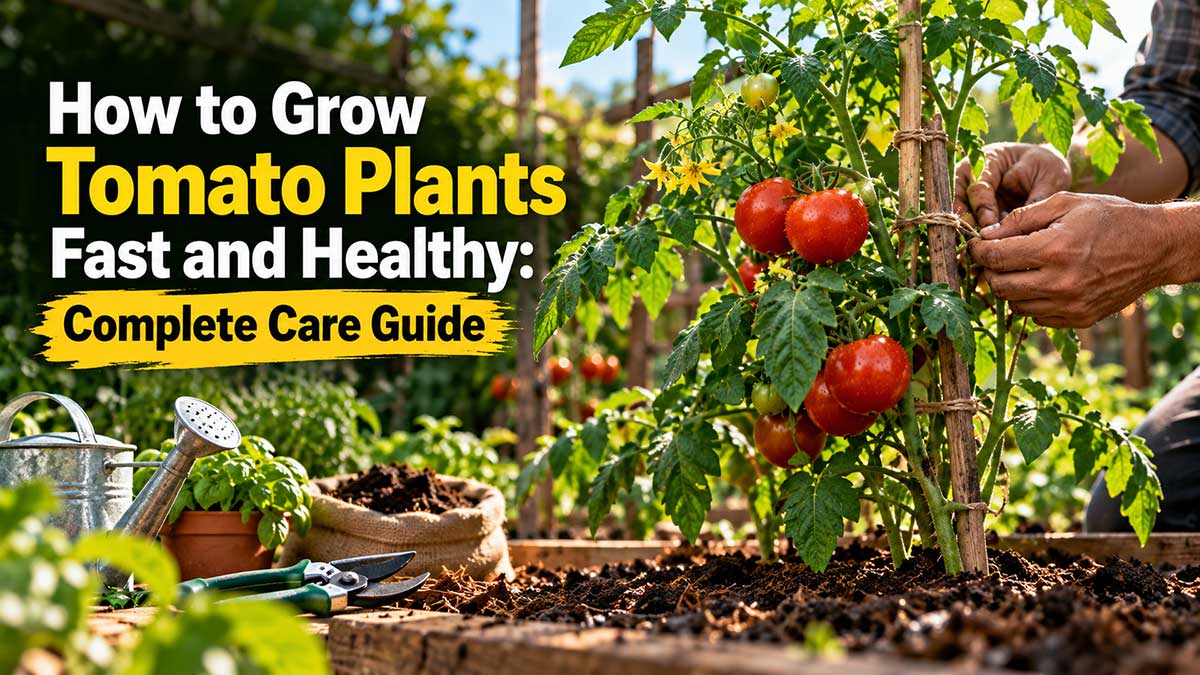
How to Grow Tomato Plants Fast and Healthy: Complete Care Guide
Tomatoes are one of the most rewarding plants to grow at home, but they're also known for being a little demanding — they need consistent watering, regular feeding, and enough sunlight to produce a good harvest. If your tomato plants are growing slowly, looking leggy, or not fruiting well, small adjustments to soil, watering, and feeding can make a dramatic difference. This guide covers everything you need for fast, healthy tomato growth from seedling to harvest.
Choosing the Right Variety
Start by picking a variety suited to your growing space and climate. Determinate varieties grow to a fixed, compact size and are well suited to containers and balconies, while indeterminate varieties keep growing and producing over a longer season but need more support and space.
Cherry tomato varieties are generally the fastest and most forgiving choice for beginners, producing fruit sooner than large beefsteak types.
Soil Preparation
Tomatoes need loose, well-draining, nutrient-rich soil to develop strong roots. A good mix is roughly 50% quality potting soil, 30% compost or vermicompost, and 20% coarse sand or perlite for drainage.
Avoid dense, clay-heavy soil, which holds too much water and restricts root growth. If planting in a container, choose one at least 12 inches deep, since tomatoes develop extensive root systems.
Sunlight Requirements
Tomatoes are sun-loving plants and need a minimum of 6 to 8 hours of direct sunlight daily to grow quickly and produce well. Plants grown in partial shade will survive but tend to grow slowly, develop weak, leggy stems, and produce far less fruit.
If you're growing on a balcony, choose the sunniest spot available, ideally facing south or east.
Watering Schedule
Consistency matters more than frequency when watering tomatoes. Irregular watering — letting the soil dry out completely and then soaking it — is one of the leading causes of problems like blossom end rot and fruit cracking.
Water deeply whenever the top inch of soil feels dry, aiming to keep the soil evenly moist but never waterlogged. In hot weather, this may mean watering daily; in cooler weather, every two to three days is often enough.
Fertiliser Schedule by Growth Stage
- Seedling to early growth: Use a balanced or slightly nitrogen-leaning feed, such as 19:19:19, every 2 weeks to build strong foliage.
- Just before flowering: Switch to a phosphorus-rich feed, such as 10:26:26, to encourage strong flower and fruit set.
- During fruiting: Continue phosphorus-potassium focused feeding every 2 weeks, along with a calcium supplement if blossom end rot appears.
- Throughout the season: A monthly top-dressing of vermicompost supports overall soil health and a steady nutrient supply.
Staking and Support
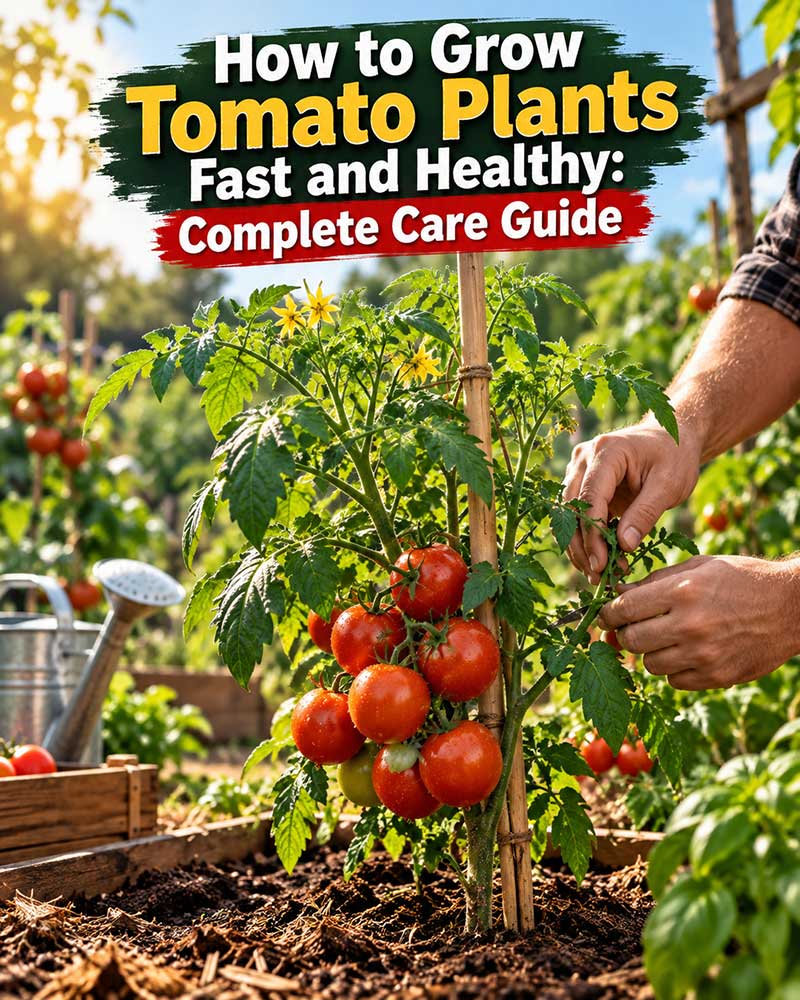
Tomato plants, especially indeterminate varieties, grow tall and heavy with fruit, and without support the stems can snap or the plant can sprawl on the ground, increasing the risk of disease and pest damage.
Install a stake, cage, or trellis early, ideally at planting time, and gently tie the main stem to it as the plant grows using soft garden twine.
Pruning Suckers
Suckers are the small shoots that emerge in the angle between the main stem and a branch. Left unpruned, they grow into full additional stems, which can make the plant bushier but also divert energy away from fruit production and reduce airflow, increasing disease risk.
For most container-grown tomatoes, pinching off suckers below the first flower cluster once a week keeps the plant focused and productive.
Common Problems and Fixes
- Blossom drop: Often caused by extreme heat or inconsistent watering. Ensure steady moisture and provide light afternoon shade in peak summer.
- Fruit cracking: Usually caused by irregular watering after a dry spell. Keep soil moisture consistent rather than alternating between dry and soaked.
- Blossom end rot: Dark, sunken patches on fruit bottoms are typically linked to a calcium uptake issue caused by inconsistent watering rather than a lack of calcium in the soil itself.
- Leaf curl or yellowing: Check first for pests like aphids or whiteflies on the undersides of leaves before assuming a nutrient issue.
Harvesting for Best Flavour
Pick tomatoes once they've reached full colour for their variety but still feel slightly firm to the touch, since fruit left to over-ripen on the vine can split or attract pests.
Harvesting regularly also signals the plant to keep producing more flowers and fruit, rather than slowing down once a few tomatoes are left to over-ripen.
If a sudden heavy rain or cold snap is expected, it's often better to pick slightly under-ripe fruit and let it finish ripening indoors on a sunny windowsill than to risk splitting or damage on the plant.
Companion Planting for Healthier Tomatoes
Growing certain companion plants nearby can naturally support tomato health. Basil and marigold are popular choices, as both are believed to help repel common pests like aphids and whiteflies, while also making efficient use of container or garden space.
Avoid planting tomatoes close to potatoes or other nightshade family plants, since they share similar pests and diseases, which can increase the risk of problems spreading between them.