

How to Apply Vermicompost
Vermicompost has become one of the most popular organic fertilisers among Indian home gardeners, and for good reason — it's gentle, nutrient-rich, and improves soil structure over time instead of just feeding the plant temporarily. But many gardeners buy a bag of vermicompost, dump a handful into the pot, and wonder why they don't see the dramatic results they expected. The truth is that vermicompost works best when it's applied at the right time, in the right quantity, and using the right method. This guide covers exactly when and how to apply vermicompost so your plants get the full benefit.
What Makes Vermicompost Different From Regular Compost
Vermicompost is produced when earthworms digest organic waste such as kitchen scraps, cow dung, and dry leaves, breaking it down into a fine, dark, crumbly material. Unlike raw manure, it is fully stabilised, meaning it won't heat up or release harmful gases once it's in the soil. It's rich in nitrogen, phosphorus, potassium, and beneficial microorganisms, and it also improves how well soil holds water and air — something chemical fertilisers can't do on their own.
The Best Time to Apply Vermicompost
Vermicompost can technically be added at almost any stage of a plant's life because it is mild and slow-releasing, but a few specific windows give the best results.
At the time of potting or repotting, mix vermicompost into the base soil so young roots have nutrients available from the very start. During the active growing season — typically spring through early monsoon for most Indian climates — top-dress established plants with vermicompost every 3 to 4 weeks to keep feeding ongoing growth.
Before flowering or fruiting, an extra application a couple of weeks ahead of the flowering stage can support stronger blooms and fruit set.
Avoid heavy applications during peak summer heat when plants are stressed, and reduce or pause feeding in winter when most plants naturally slow down and don't need extra nutrients.
How Much Vermicompost to Use
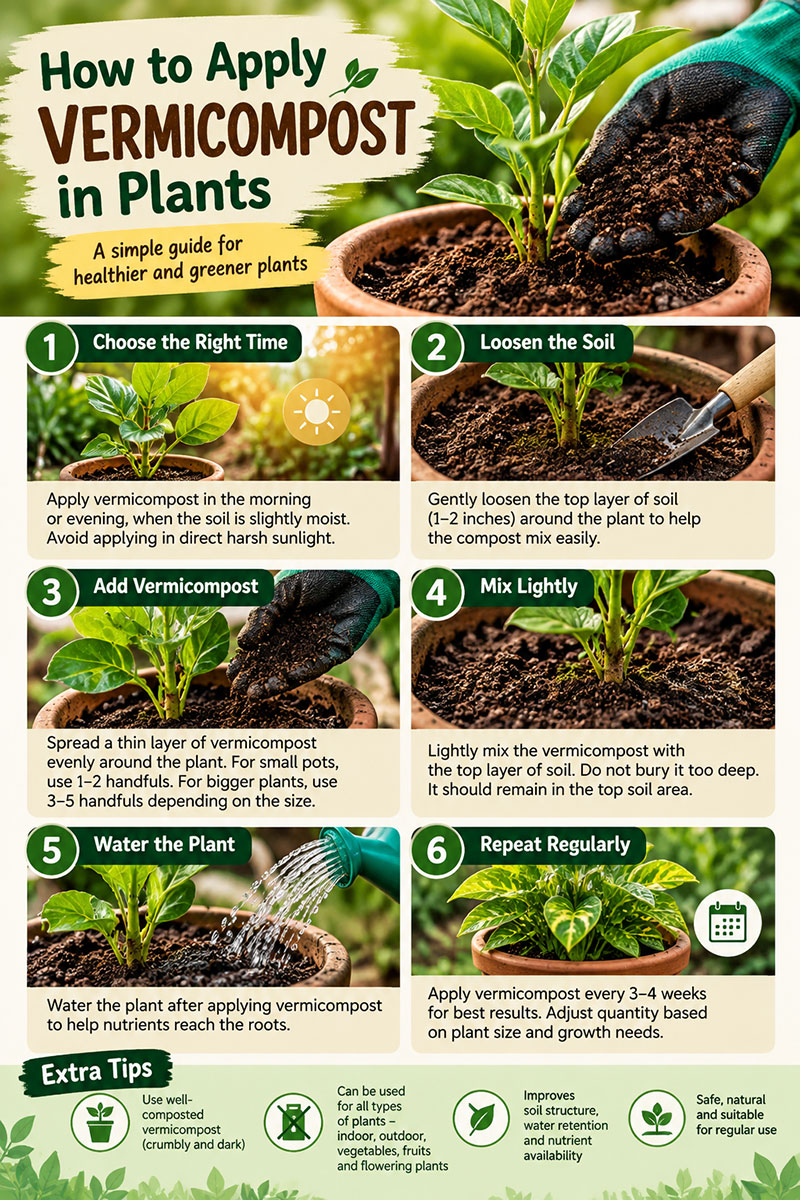
Quantity matters more than gardeners often realise. For small to medium pots (6 to 10 inches in diameter), 2 to 3 tablespoons of vermicompost every 3 to 4 weeks is generally sufficient. For larger pots or grow bags (12 inches and above), you can use half a cup to one cup per application.
For garden beds, mix in roughly 1 to 2 kg of vermicompost per square metre of soil before planting, then top-dress lightly every month during the growing season.
Unlike chemical fertilisers, it is quite difficult to "burn" a plant with vermicompost because it releases nutrients slowly rather than all at once. Still, more is not automatically better — excess vermicompost can waterlog the soil over time if used too generously in every watering, so stick to a measured routine rather than adding it whenever you remember.
Three Ways to Apply Vermicompost
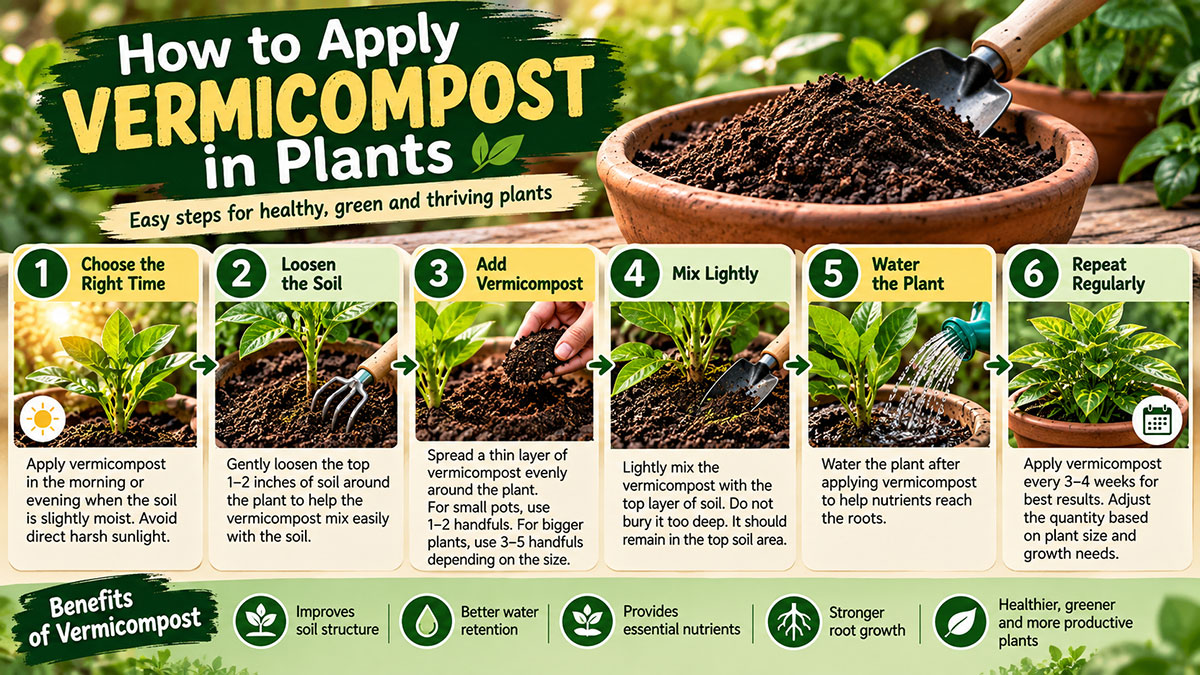
- Top Dressing: Sprinkle vermicompost evenly over the soil surface around the plant, keeping it an inch or two away from direct contact with the stem, then gently mix it into the top layer of soil with a small trowel or your fingers. Water lightly afterward so the nutrients start moving down toward the roots.
- Mixing Into Potting Soil: When potting a new plant or repotting an existing one, blend vermicompost directly into your potting mix at a ratio of roughly one part vermicompost to four or five parts regular potting soil. This gives young roots immediate access to nutrients as they establish themselves.
- Vermicompost Tea: For a faster-acting liquid feed, soak a handful of vermicompost in a litre of water for 24 to 48 hours, stirring occasionally, then strain out the solids and use the liquid to water your plants. This method is especially useful for houseplants and seedlings that respond well to gentle liquid feeding.
Common Mistakes to Avoid
- Piling vermicompost directly against the stem or trunk, which can encourage rot.
- Using vermicompost that still smells strongly of ammonia or looks wet and clumpy — it should be dark, crumbly, and earthy-smelling.
- Expecting instant results; vermicompost works gradually over several weeks, not overnight.
- Skipping watering after application, which slows down how quickly nutrients reach the roots.
- Over-applying in the mistaken belief that "organic" means it can never be too much.
Which Plants Benefit Most From Vermicompost
While almost every plant responds well to vermicompost, some benefit more visibly than others. Leafy vegetables like spinach and coriander respond quickly with darker, faster foliage growth.
Flowering plants such as roses, hibiscus, and marigold show improved bloom size and frequency when vermicompost is used consistently through the growing season.
Fruiting plants like tomatoes and chillies benefit from the steady, slow-release nutrition, which supports fruit development without the sharp growth spurts and crashes that can come from chemical fertilisers.
Even succulents and cacti, which need very light feeding, can take a small, infrequent dose of vermicompost without issue.
Vermicompost vs Chemical Fertiliser: A Quick Comparison
Chemical fertilisers act fast and deliver an exact, measurable dose of nutrients, which makes them useful when a plant needs a quick correction. Vermicompost, by contrast, releases nutrients gradually over weeks, is far more forgiving of small measurement errors, and actively improves the soil's structure, water retention, and microbial life over time — something chemical fertilisers cannot do.
Many experienced gardeners use both: chemical feed for a fast, targeted fix, and vermicompost as the steady, ongoing foundation of their feeding routine.