
Write us
info@agrigyan.com
+91 9999052385
Request a call back

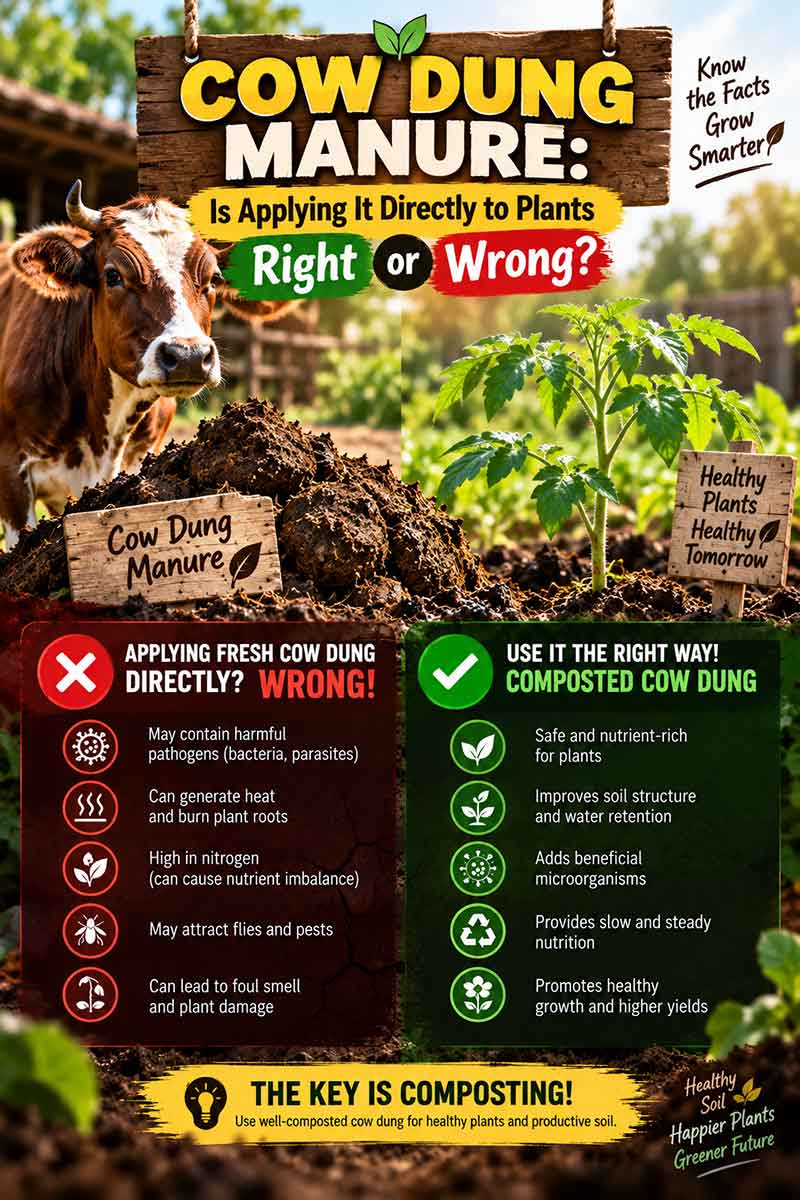
Cow Dung Manure: Is Applying It Directly to Plants Right or Wrong?
Cow dung manure, commonly known as gobar khad, is one of the most traditional and widely used organic fertilisers in Indian gardening and farming. It's affordable, easy to source, and genuinely effective at improving soil fertility. But a common mistake many home gardeners make is applying fresh, raw cow dung directly to their plants, expecting the same benefit as properly composted manure. In reality, this can do more harm than good. This article explains why raw cow dung is risky, how it differs from composted manure, and exactly how to use it safely.
Why Fresh, Raw Cow Dung Is Risky
Fresh cow dung is still actively decomposing, which means it continues to break down after you apply it — and that breakdown process generates heat and releases ammonia gas. When raw dung is placed near a plant's roots, the heat and ammonia can scorch or "burn" the delicate root hairs, damaging the very system the plant relies on to absorb water and nutrients. This is often why a plant treated with fresh dung looks worse, not better, within a few days.
Beyond the burning risk, fresh cow dung frequently carries weed seeds that pass through the animal's digestive system undigested, which then sprout in your pot or garden bed once conditions are right. It can also harbour harmful bacteria and pathogens, since the composting process is what neutralises these organisms — raw dung hasn't gone through that step yet. On top of that, fresh dung attracts flies and can produce a strong, unpleasant odour, which is rarely welcome in a home garden or balcony setting.
The Difference Between Fresh Dung and Composted Manure
Composted cow dung manure has been left to break down fully over several weeks to months, typically turned periodically and kept moist, allowing beneficial microbes to stabilise the material. By the end of this process, the manure is dark, crumbly, largely odourless apart from an earthy smell, and safe for direct contact with plant roots. The nutrients are also more readily available to plants in this form, since composting converts raw organic compounds into forms roots can actually absorb.
How to Compost Cow Dung Correctly
- Collect fresh cow dung and mix it with dry organic material such as dried leaves, straw, or sawdust to balance moisture and airflow.
- Pile the mixture in a shaded spot, ideally in a bin, pit, or heap with some airflow, and keep it moist but not waterlogged.
- Turn the pile every 1 to 2 weeks to introduce oxygen and speed up even decomposition.
- Allow it to break down for at least 2 to 3 months; longer for a finer, more finished manure.
- Know it's ready when the material is dark brown to black, crumbly, and smells like earth rather than dung or ammonia.
How to Apply Composted Cow Dung Manure
Once fully composted, cow dung manure can be mixed into potting soil at planting time at a ratio of roughly one part manure to four or five parts soil, or used as a top dressing around established plants every 4 to 6 weeks, keeping it a couple of inches away from direct contact with the stem. For garden beds, work in around 2 to 3 kg per square metre before planting, then top up lightly during the growing season.
Signs Your Manure Isn't Ready Yet
- Strong smell of ammonia or raw dung rather than earthy soil.
- Visible clumps or straw-like fibrous material still holding its original shape.
- Noticeably warm or hot to the touch when you dig into the pile.
- Wet, sludgy texture instead of a dry, crumbly consistency.
A Simpler Alternative: Vermicompost
If composting cow dung yourself isn't practical, vermicompost is a widely available, ready-to-use alternative that is essentially cow dung and other organic waste already processed and stabilised by earthworms. It offers similar soil-improving benefits without the wait or the risk of applying something that hasn't fully broken down.
Cow Dung Manure vs Vermicompost vs Chemical Fertiliser
All three have a place in Indian gardening, but they serve slightly different purposes. Composted cow dung manure is affordable, widely available, and excellent for building long-term soil fertility and structure, though it needs advance preparation time. Vermicompost is essentially a more refined, faster-acting version of the same idea, already processed by earthworms into a ready-to-use form with a milder, more consistent nutrient profile. Chemical fertilisers like NPK blends act the fastest and offer precise, measurable nutrient ratios, but don't improve soil structure or microbial life the way organic options do. Many gardeners get the best results by using composted cow dung manure or vermicompost as their ongoing soil-building routine, with chemical fertiliser reserved for quick, targeted corrections when a plant shows a specific deficiency.