
Write us
info@agrigyan.com
+91 9999052385
Request a call back

5 best plants for a low light room
What Counts as Low Light
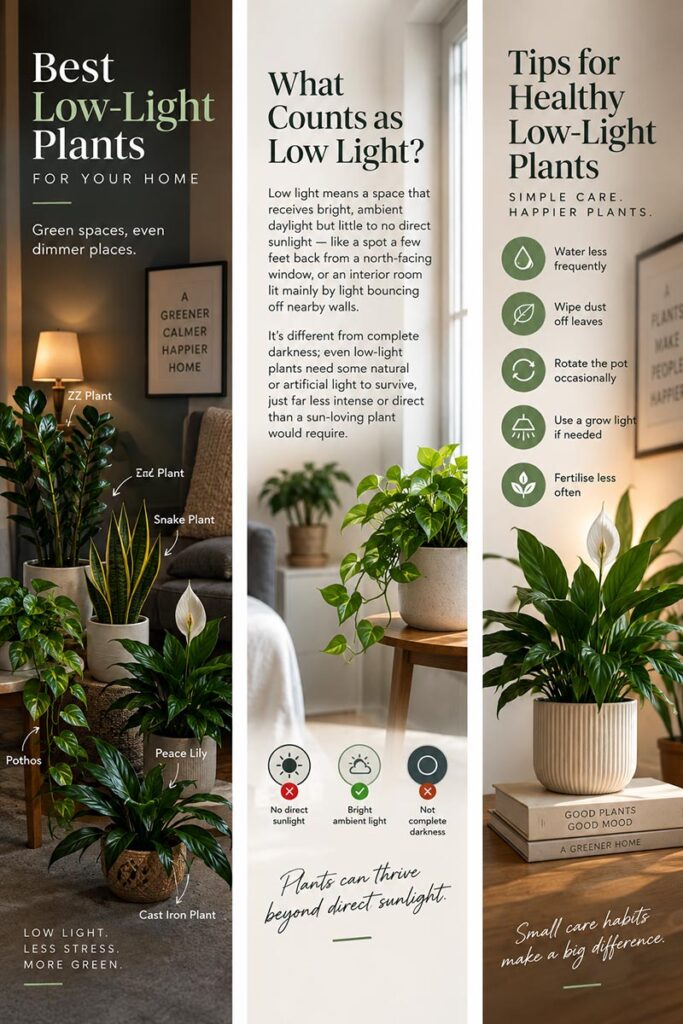
Low light generally means a space that receives bright, ambient daylight but little to no direct sunlight — think a spot a few feet back from a north-facing window, or an interior room lit mainly by light bouncing off nearby walls. It's different from complete darkness; even low-light plants need some natural or artificial light to survive, just far less intense or direct than a sun-loving plant would require.
1. ZZ Plant
ZZ plant is often the first recommendation for genuinely dim spaces, tolerating low light better than almost any other common houseplant while still producing glossy, attractive foliage. It also stores water in its thick rhizomes, making it forgiving of infrequent watering — a useful trait since low-light plants generally need less frequent watering overall as they use water more slowly.
2. Snake Plant
Snake plant handles a wide range of light conditions, including quite dim corners, while maintaining its upright, sculptural leaves. It's also notably resistant to overwatering mistakes compared to many other houseplants, making it a solid choice for beginners still learning to judge watering needs.
3. Pothos
Pothos is one of the most adaptable trailing plants available, tolerating low light while still growing at a reasonable pace, and it's easy to propagate from cuttings if you want to expand your collection for free. Its trailing habit also makes it a good fit for shelves or hanging planters in rooms with limited floor space.
4. Peace Lily
Peace lily tolerates low light well and rewards consistent care with elegant white blooms, even indoors. It also gives a clear visual cue when it needs water, drooping noticeably before perking back up shortly after watering, which makes it easier to care for correctly than plants that hide their stress until it's more advanced.
5. Cast Iron Plant
True to its name, cast iron plant is remarkably tough, tolerating low light, inconsistent watering, and general neglect better than almost any other houseplant. Its dark green, leathery leaves and slow growth rate make it a great, low-fuss option for a dim room that doesn't need frequent tending.
Honourable Mentions
A few other plants deserve a mention for low-light tolerance: Chinese evergreen (Aglaonema) offers attractive patterned leaves and handles dim rooms well; spider plant tolerates lower light better than many flowering houseplants while staying easy to propagate; and philodendron, particularly the heartleaf variety, is a forgiving trailing option similar in toughness to pothos. Any of these make a reasonable substitute or addition to the main five if you want more variety in leaf shape and texture around a dim room.
How to Choose Between These Five
If you want something upright and sculptural, snake plant or ZZ plant fit best. If you prefer a trailing plant for a shelf or hanging planter, pothos is the clear choice. If you'd like the possibility of flowers even in a dim spot, peace lily is the only one on this list that blooms reliably indoors. And if you want the single most forgiving, hardest-to-kill option for a genuinely neglected corner, cast iron plant is difficult to beat, tolerating months of inconsistent care without serious complaint.
Tips for Helping Low-Light Plants Thrive
- Water less frequently than you would for a sun-loving plant, since low light slows a plant's overall metabolism and water use.
- Wipe dust off leaves periodically, since dust buildup can further block the limited light these plants are already working with.
- Rotate the pot occasionally so all sides get relatively even light exposure over time.
- Consider a small LED grow light if the room is extremely dim, running it for several hours daily to supplement natural light.
- Avoid fertilising as frequently as you would for a plant in bright light, since slower growth means lower nutrient needs.