

Plant Growth Stopped? 5 Common Reasons and How to Fix Them
If your plant has stopped putting out new leaves, hasn't gained an inch in weeks, or simply looks "stuck" despite your regular watering and care, you are not alone. Stalled plant growth is one of the most common complaints among home gardeners in India, and the frustrating part is that a plant can look perfectly green and healthy while quietly refusing to develop any further. The good news is that stunted growth almost always traces back to one of a handful of root causes, and once you identify the right one, the fix is usually simple. This guide walks through the five most common reasons plants stop growing, how to spot each one, and exactly what to do about it.
1. The Pot Has Become Too Small (Root-Bound Plant)
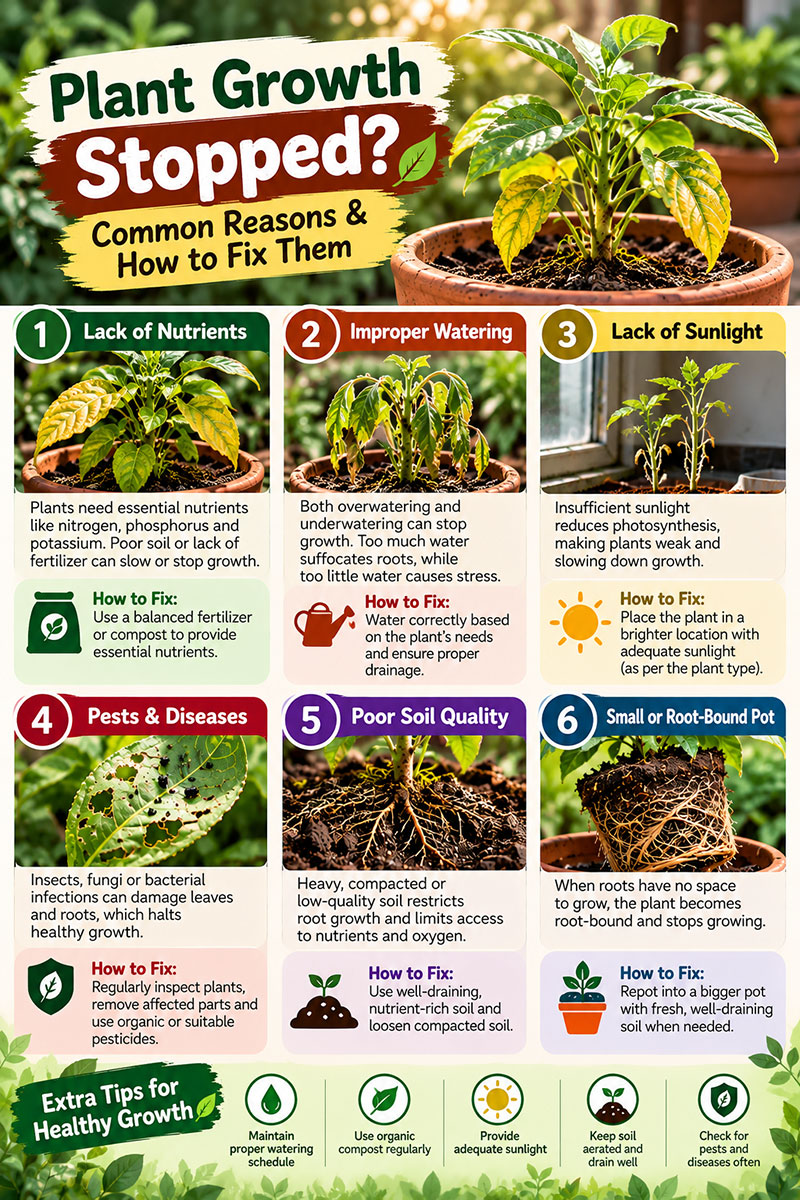
Every pot has a limited volume of soil, and as a plant matures, its root system keeps expanding to match its size. Once the roots run out of room, they start circling around the inside of the pot in a tight, tangled mass. A root-bound plant simply cannot absorb enough water and nutrients to support new growth above the soil, so the entire plant slows down or stops completely, even if you are feeding and watering it correctly.
You can usually tell a plant is root-bound by a few tell-tale signs: roots poking out of the drainage holes at the bottom of the pot, water running straight through the pot without being absorbed, the plant drying out unusually fast after watering, or the plant looking top-heavy compared to its container. If you gently slide the plant out of its pot and see a dense wall of roots circling the root ball with very little visible soil, that confirms it.
The fix is straightforward: repot the plant into a container that is 2 to 3 inches wider and deeper than the current one, using fresh potting mix. Before placing it in the new pot, gently loosen the outer roots with your fingers so they can grow outward into the new soil instead of continuing to circle. Water well after repotting and keep the plant out of harsh direct sun for a few days while it recovers.
2. Nutrient Deficiency, Especially Nitrogen
Potted plants rely entirely on the nutrients present in their soil, and those nutrients get used up over time, especially with regular watering that washes nutrients out through the drainage hole. Nitrogen is the nutrient most responsible for leafy, vegetative growth, so when it runs low, new growth slows down dramatically and existing leaves may look pale or lighter green than usual.
Phosphorus and potassium deficiencies can also stall growth, though their symptoms are a little different: weak stems, poor root development, and reduced flowering are common signs. In most cases, a plant that hasn't been fed in three to four months and is growing in the same soil it was potted in originally is simply running out of food.
The fix here is to feed the plant with a balanced fertiliser. For general leafy growth, a balanced NPK fertiliser (something like 19:19:19) or a nitrogen-leaning organic feed such as vermicompost works well. Apply according to the pot size, water immediately after feeding, and avoid the temptation to overdo it. More fertiliser is not better; overfeeding can burn the roots and make growth problems worse rather than better.
3. Incorrect Watering — Too Much or Too Little
Watering is the single most common thing gardeners get wrong, and both extremes can stop growth in its tracks. Overwatering keeps the soil constantly wet, which pushes air out of the soil and suffocates the roots. Without oxygen, roots start to rot, and a plant with damaged roots simply cannot take up nutrients, no matter how much fertiliser you apply. Underwatering, on the other hand, puts the plant into a kind of survival mode, where it conserves energy instead of putting out new growth.
Instead of watering on a fixed schedule, check the soil before every watering. Push a finger about two inches into the soil; if it feels dry at that depth, it's time to water. If it still feels moist, wait another day or two. This single habit solves the majority of watering-related growth problems, since it adapts to your plant's actual needs rather than a generic calendar.
4. Not Enough Sunlight
Plants generate the energy they need to grow through photosynthesis, which depends directly on light. When a plant that needs bright light is kept in a dim corner or a room with only artificial lighting, it doesn't have enough energy to produce new leaves or stems, even if water and nutrients are perfectly balanced. Many gardeners underestimate just how much light a spot actually receives; a corner that feels "bright enough" to the human eye can still be far too dim for a sun-loving plant.
Most flowering and fruiting plants need at least 5 to 6 hours of direct or strong indirect sunlight a day, while foliage plants can often manage with bright indirect light. If growth has slowed and the plant is in a shaded spot, try moving it closer to a window or a slightly sunnier location for a couple of weeks and watch for new growth. If natural light genuinely isn't available, an inexpensive LED grow light can make a real difference.
5. Pest or Disease Stress
Sap-sucking pests like mealybugs, aphids, and spider mites drain a plant's energy reserves, leaving little left over for new growth. Because many of these pests hide on the undersides of leaves or in leaf joints, they can go unnoticed for weeks while the plant quietly struggles. Fungal and root diseases work in a similar way, damaging the plant's internal systems so that even a well-fed, well-watered plant fails to progress.
Inspect the undersides of leaves, stem joints, and the soil surface closely for tiny insects, sticky residue, webbing, or white cottony spots. If you find pests, isolate the plant from others and treat it with neem oil spray or insecticidal soap, repeating every 7 to 10 days until the infestation clears.
Quick Diagnostic Checklist
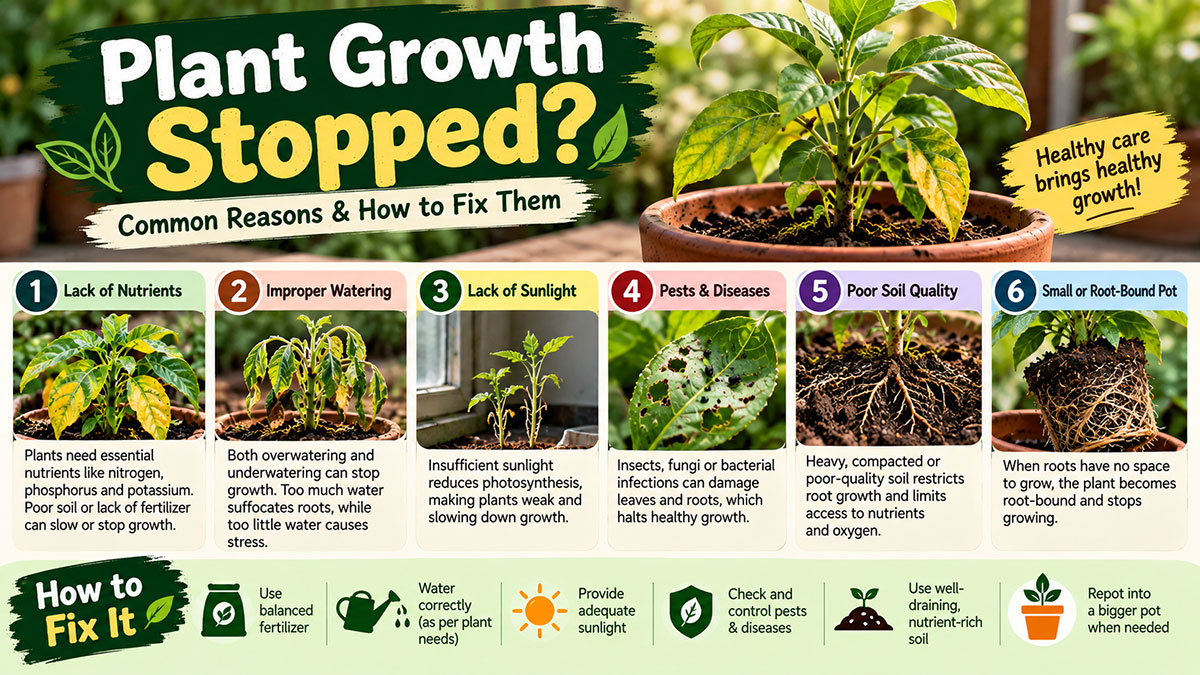
Before changing your plant-care routine, check these key signs to identify what your plant actually needs.