Write us
info@agrigyan.com
+91 9999052385
Request a call back

Flowers But No Fruit? Here’s Why (and How to Fix It)
Why Are My Plant's Flowers Dropping Without Producing Fruit?
There's nothing more disappointing than watching your plant bloom beautifully, only for those flowers to wither and drop without ever turning into fruit. This is an extremely common issue with tomatoes, chillies, cucumbers, and many other fruiting plants, and it almost always comes down to one of a few specific causes: poor pollination, a nutrient imbalance, or environmental stress. This guide breaks down each cause and what to do about it.
1. Poor or Missing Pollination
Many flowering and fruiting plants rely on insects like bees and other pollinators to transfer pollen from the male part of a flower to the female part before fruit can begin developing. Plants grown indoors, on enclosed balconies, or in areas with very few pollinators around often flower reliably but fail to set fruit simply because nothing is transferring the pollen.
Cucumbers, pumpkins, and other cucurbit-family plants add an extra twist: they produce separate male and female flowers on the same plant, and fruit will only form from the female flowers once pollinated, so a flush of only male flowers early in the season is completely normal and not a problem on its own.
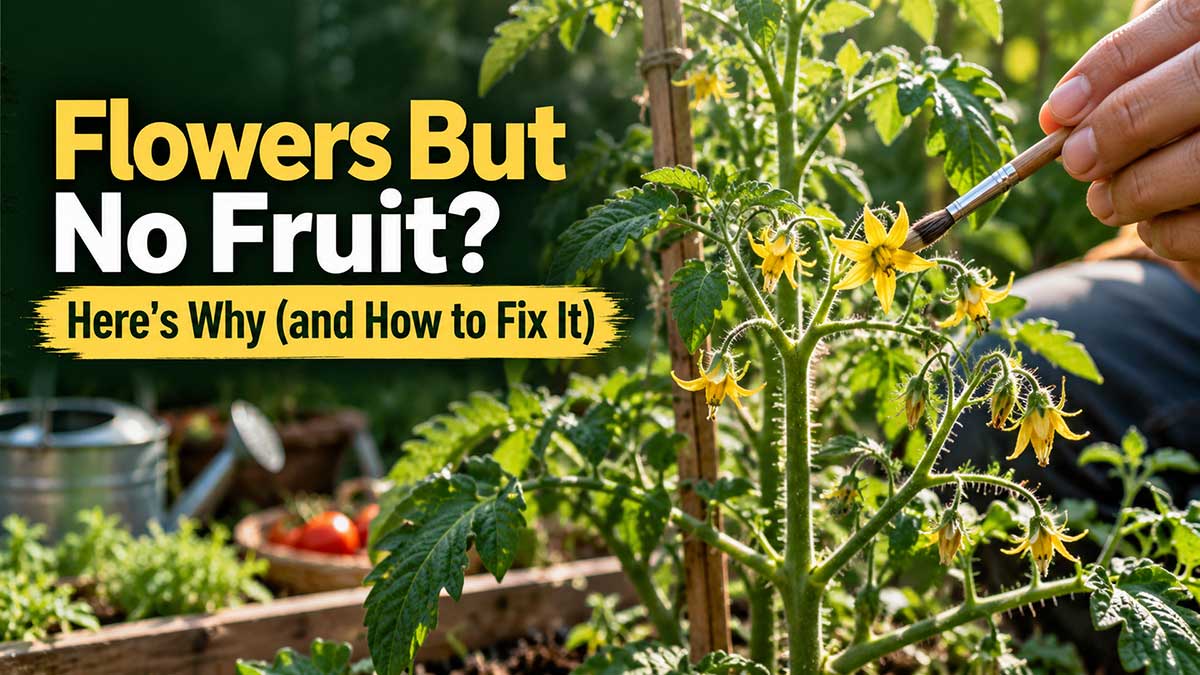
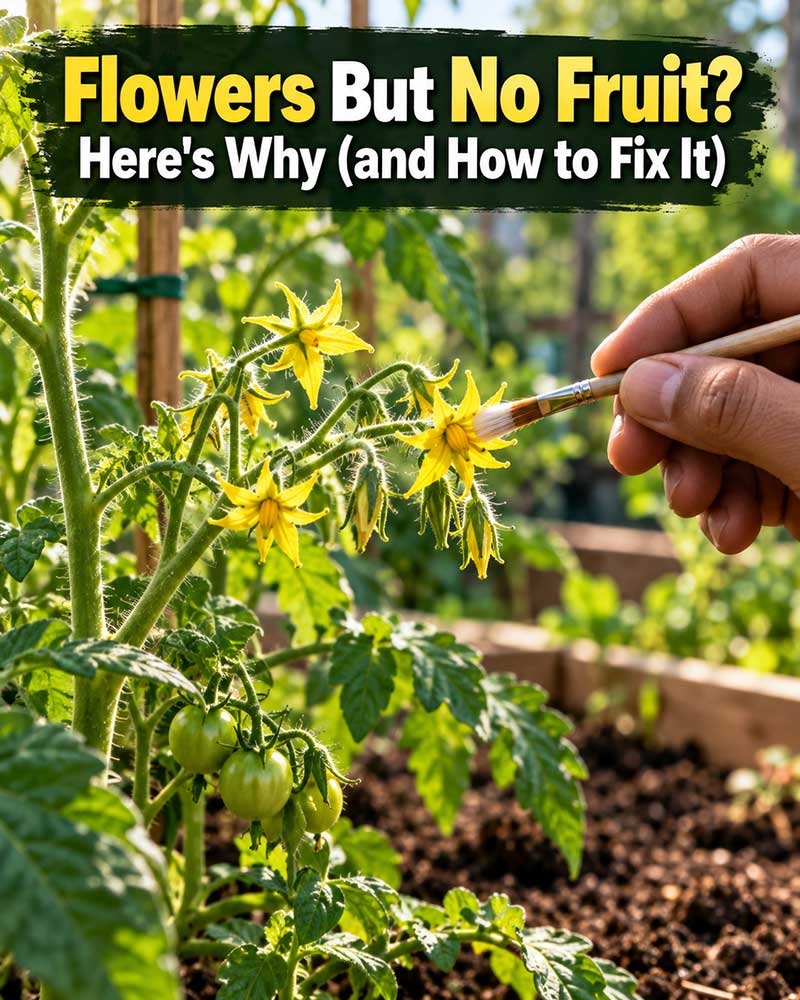
The fix, especially for balcony or indoor growers, is hand pollination. Use a small, soft brush or cotton swab to gently transfer pollen from the centre of one flower to another, ideally in the morning when flowers are freshly open. For cucurbits, identify female flowers by the tiny swelling (a miniature fruit) behind the petals, and dab pollen from a freshly opened male flower onto them.
2. Too Much Nitrogen, Too Little Phosphorus and Potassium
Nitrogen drives leafy growth, and while some is necessary, an excess relative to phosphorus and potassium pushes the plant to focus its energy on producing lush foliage rather than flowers and fruit. This is a very common mistake when gardeners repeatedly use a nitrogen-heavy or all-purpose fertiliser through the flowering stage instead of switching to a phosphorus-rich feed.
If your plant looks dark green and bushy but flowers drop without fruiting, ease off nitrogen-heavy feeding and switch to a phosphorus and potassium-focused fertiliser, such as a 10:26:26 blend, once flowering begins.
3. Temperature Stress
Many fruiting plants, tomatoes and chillies included, are sensitive to temperature extremes during flowering. Very high daytime heat, especially above 35°C, or unusually cool nights can interfere with pollen viability, causing flowers to drop before fruit can set, even when pollination happens. This is a common reason gardeners see plenty of flowers in peak summer with disappointingly little fruit to show for it.
There isn't a way to control outdoor temperature directly, but providing light afternoon shade during extreme heat, ensuring consistent watering to reduce overall plant stress, and choosing heat-tolerant varieties where possible can meaningfully improve fruit set during hot spells.
4. Inconsistent Watering
Both drought stress and waterlogging around the flowering stage commonly cause flowers to drop before they can develop into fruit. A plant under water stress prioritises survival over reproduction, shedding flowers and even small developing fruit to conserve energy.
Keep watering consistent, particularly through the flowering and early fruiting stage, checking soil moisture regularly rather than letting the plant swing between bone-dry and waterlogged.
5. Natural Flower Drop
It's worth noting that not every dropped flower is a problem. Many plants naturally produce more flowers than they can support with fruit, and shed a percentage of them as a normal part of resource management. If a plant is setting some fruit, growing normally, and only losing a portion of its flowers, this is often nothing to worry about.
Attracting Natural Pollinators
If your garden or balcony gets very few visits from bees and other pollinating insects, hand pollination will always work as a reliable backup, but you can also improve pollination naturally over time.
Planting a few flowering herbs nearby, such as basil, mint allowed to flower, or marigold, tends to draw in bees and hoverflies, which will then visit your fruiting plants' flowers as well. Avoid spraying pesticides during the flowering window, since even mild sprays can deter or harm visiting pollinators right when you need them most.
Keeping a small, shallow dish of water nearby on hot days can also make your garden more attractive to passing pollinators.
Quick Checklist for Poor Fruit Set
- Is the plant indoors, on an enclosed balcony, or in an area with few pollinators? → Try hand pollination.
- Is the plant lush and leafy but flowering poorly? → Reduce nitrogen and switch to a phosphorus-rich feed.
- Is it a heatwave or unusually cool spell? → Provide shade, keep watering consistent, and wait for conditions to improve.
- Has watering been inconsistent lately? → Establish a regular watering routine.
- Is only a small percentage of flowers dropping while others set fruit? → This is likely normal, so no action is needed.