
Write us
info@agrigyan.com
+91 9999052385
Request a call back

Chemical Fertiliser vs Organic Manure: When to Use Which
Chemical Fertiliser vs Organic Manure: Which Is Better for Your Garden?
One of the most common questions new gardeners ask is whether they should feed their plants with chemical fertiliser, organic manure, or some combination of both. Both approaches genuinely work, but they behave quite differently, and understanding those differences helps you use each one where it actually makes the most sense rather than picking one out of habit or hearsay. This guide compares the two directly across the factors that matter most for home gardening.
What Each One Actually Is
Chemical fertilisers, sometimes called synthetic or inorganic fertilisers, are manufactured products that deliver specific, measured nutrients — typically nitrogen, phosphorus, and potassium in a precise ratio printed on the packaging, such as 19:19:19. Organic manure refers to nutrient sources derived from plant or animal matter, such as composted cow dung, vermicompost, neem cake, and similar materials, which release nutrients as microorganisms in the soil break the material down over time.
Speed of Results
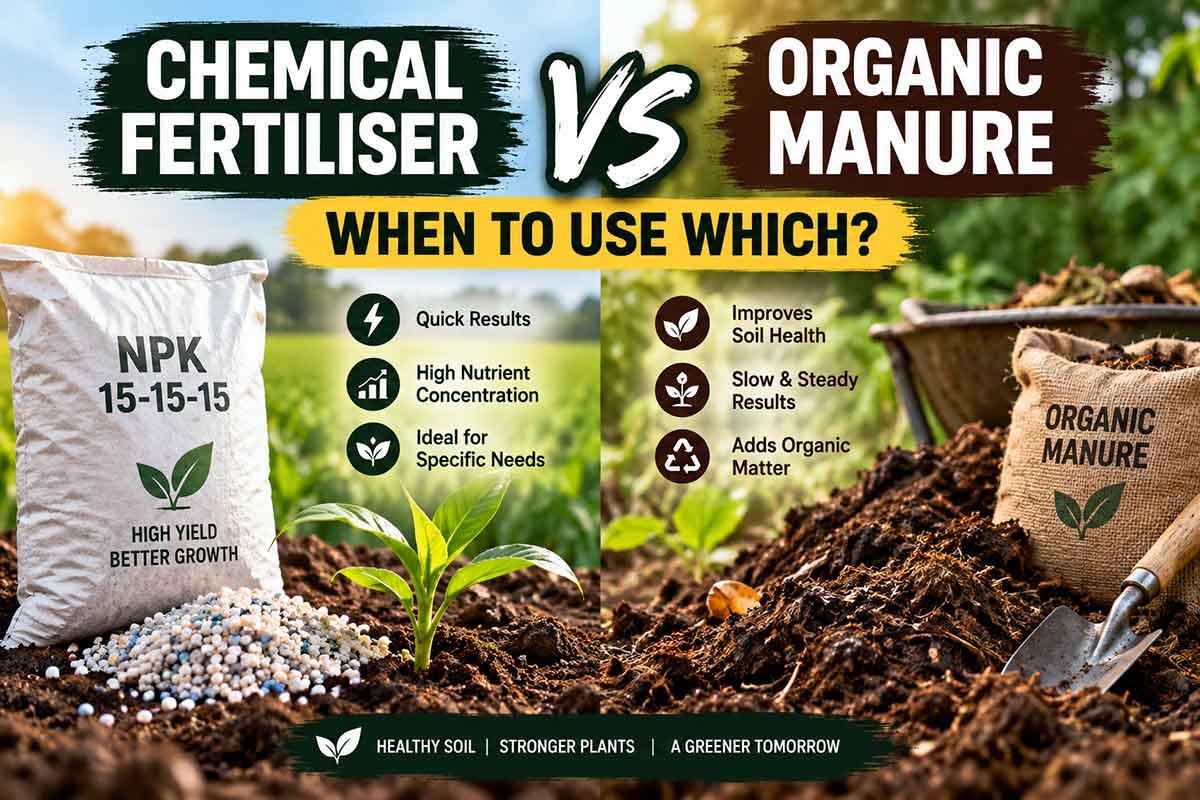
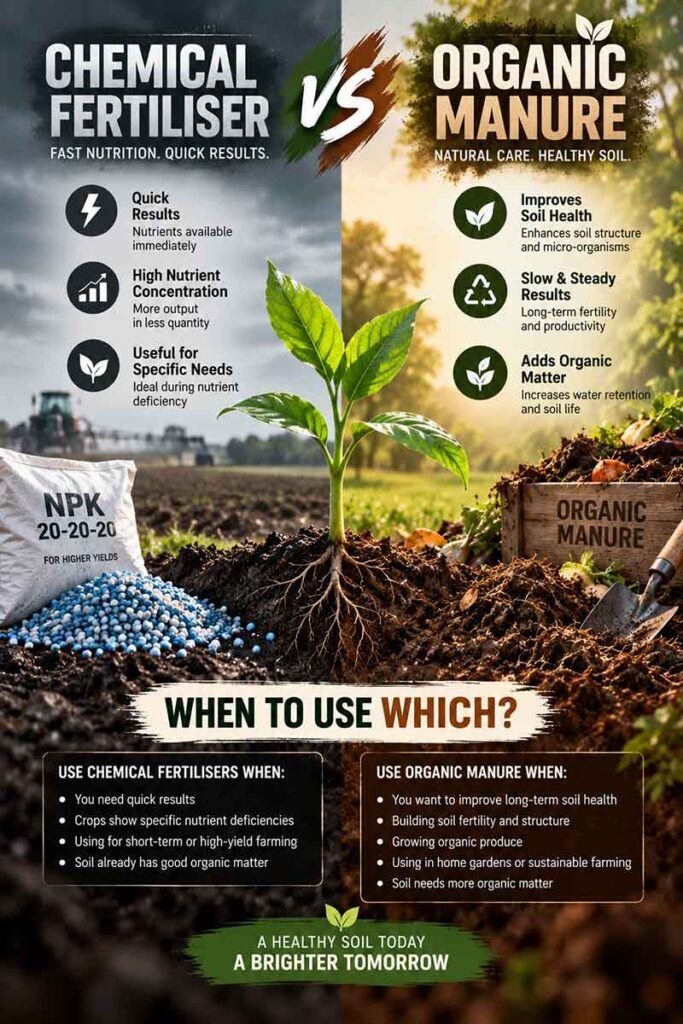
Chemical fertilisers act fast because the nutrients are already in a form plant roots can absorb immediately upon dissolving in water. Visible improvement, such as greener leaves or faster growth, often appears within a week. Organic manure works more gradually, since nutrients only become available as soil microbes break the material down, which typically takes several weeks. If a plant needs an urgent correction for a visible deficiency, chemical fertiliser will show results faster.
Effect on Soil Health Over Time
This is where organic manure has a clear, well-documented advantage. Repeated use of organic inputs like vermicompost and composted manure steadily builds up organic matter in the soil, improving its structure, water retention, and the population of beneficial microbes that support long-term plant health. Chemical fertilisers, when used exclusively over long periods without any organic input, don't contribute to this soil-building process and can, in some cases, gradually degrade soil structure and disrupt the natural microbial balance.
Cost and Availability
Chemical fertilisers are widely available at nurseries and garden stores, reasonably affordable per application, and easy to store since they come in stable, compact packaging. Organic manure is also affordable, sometimes even free if home-composted from kitchen waste, though it takes up more storage space and, if composted at home, requires an upfront investment of time and effort rather than money.
Risk of Misuse
Chemical fertilisers carry a higher risk of "burning" a plant's roots if over-applied or used without proper dilution, since the concentrated nutrients can draw moisture out of root cells through osmosis. Organic manure is far more forgiving in this regard, since it releases nutrients slowly, though using under-composted or fresh organic material — like raw cow dung — carries its own separate risks, including root damage from heat and ammonia, as well as pathogens.
Environmental Considerations
Organic manure recycles waste material — kitchen scraps, farm byproducts, and animal dung — back into productive use, and generally has a lighter environmental footprint in terms of manufacturing and transport compared to industrially produced chemical fertiliser. That said, chemical fertilisers, when used at the correct recommended dosage rather than excessively, aren't inherently harmful to the immediate environment; problems typically arise from over-application and runoff at a large agricultural scale rather than from careful, measured use in a home garden.
Which Works Better for Container Gardening
Container gardening has a particular quirk: potting soil has a fixed, limited volume, and nutrients get flushed out through drainage holes with every watering faster than they would in open garden soil. This makes potted plants more prone to running low on nutrients between feedings. Organic manure works well here as a steady baseline, mixed into the potting soil at planting and topped up every few weeks, while an occasional light dose of chemical fertiliser can help address any sudden, visible deficiency without waiting for slow-release organic matter to catch up. Container gardeners often find combining both approaches gives the most consistent, low-maintenance results.
A Practical Combined Approach
Most experienced gardeners don't pick one exclusively — they use organic manure like vermicompost or composted cow dung as the ongoing foundation of their feeding routine, applied every few weeks to steadily build soil health, and reserve chemical fertiliser for targeted, occasional use when a plant shows a specific, urgent deficiency that needs a fast correction.
Quick Decision Guide
- Need a fast fix for a visibly struggling plant → chemical fertiliser, applied carefully and diluted.
- Building long-term soil health in pots or garden beds → organic manure like vermicompost or composted cow dung.
- Growing food crops you're cautious about chemical residue on → lean toward organic inputs.
- Managing many plants with limited time for composting → chemical fertiliser is more convenient to store and measure.
- Want the best overall results → combine both: organic as the steady base, chemical as an occasional targeted boost.