
Write us
info@agrigyan.com
+91 9999052385
Request a call back


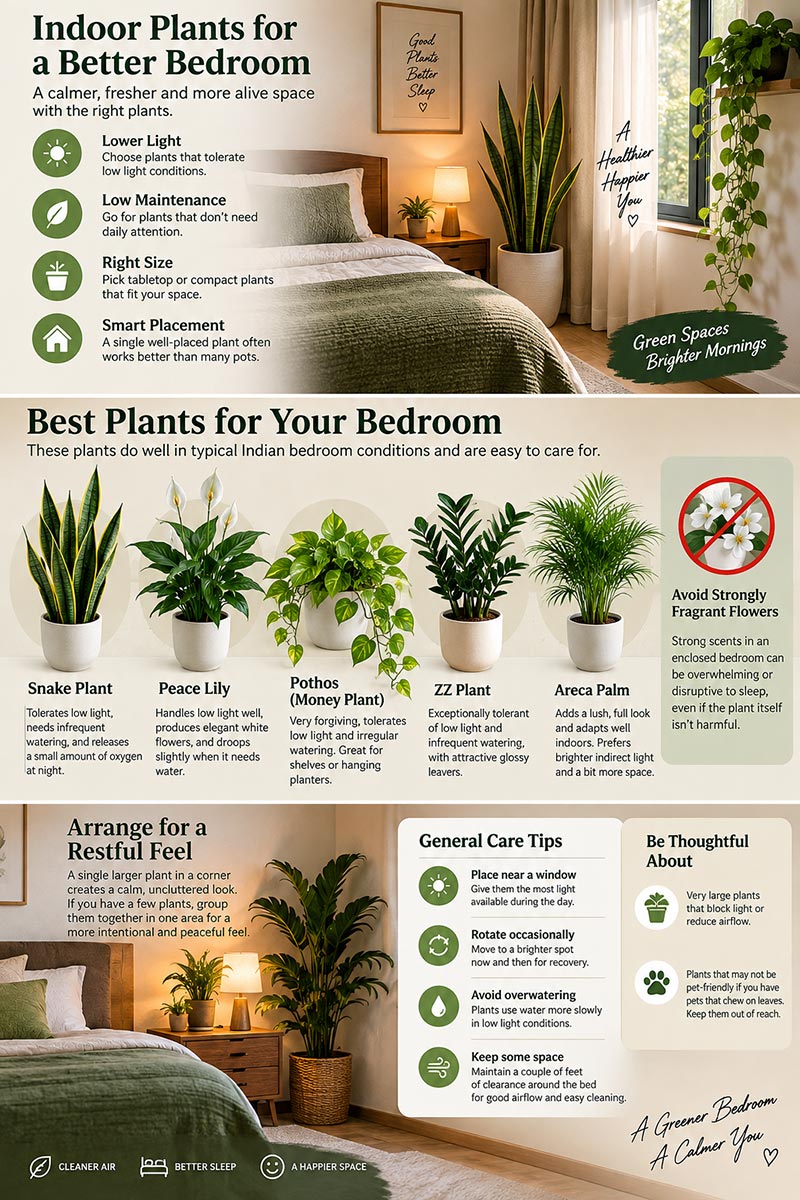
Which Plants Are Good for the Bedroom?
Adding Plants to a Bedroom
Adding plants to a bedroom can make the space feel calmer and more alive, but bedrooms come with a specific set of conditions — often lower light than other rooms, closed doors and windows at night, and limited floor or shelf space — that make some plants a better fit than others. This guide covers what to consider and which plants tend to do particularly well in typical Indian bedroom conditions.
What to Consider for Bedroom Plants
Bedrooms often get less direct sunlight than living rooms or balconies, especially if curtains stay drawn for privacy or the window faces a shaded direction, so plants that tolerate lower light are generally a better fit than sun-hungry varieties.
Low maintenance also matters more here than in other rooms, since a bedroom plant that needs daily attention or frequent repositioning for light can become more chore than calming presence.
Size and placement matter too — a bedroom usually has less open floor space than a living room, so smaller tabletop or shelf-friendly plants, or a single well-placed larger plant in a corner, tend to work better than several bulky pots.
Good Plant Options for Bedrooms
Snake Plant
One of the most popular bedroom plants, snake plant tolerates low light well, needs infrequent watering, and has an upright, architectural shape that doesn't take up much floor space. It's also known for continuing a small amount of oxygen release at night, unlike many plants, which adds to its popularity as a bedroom choice.
Peace Lily
Peace lily handles lower light conditions gracefully and produces elegant white flowers even indoors. It also clearly signals when it needs water by drooping slightly, making it fairly easy to care for even for beginners who are still learning to read a plant's needs.
Pothos (Money Plant)
An extremely forgiving trailing plant that tolerates low light and irregular watering, pothos is a great choice for a shelf, hanging planter, or a spot near a window that doesn't get strong direct sun. It's widely available and inexpensive, making it a low-risk plant to start with.
ZZ Plant
ZZ plant is exceptionally tolerant of low light and infrequent watering, with glossy, attractive leaves that hold up well even with minimal care, making it one of the most forgiving options for a bedroom that doesn't get much natural light.
Areca Palm
For a bedroom with a bit more available light and space, areca palm offers a lush, full look and adapts reasonably well to indoor conditions, though it does appreciate brighter indirect light than the options above.
A Note on Fragrant Flowering Plants
Strongly fragrant flowering plants are best kept out of the bedroom or placed well away from the bed, since a strong scent in an enclosed space overnight can be overwhelming or disruptive to sleep for some people, even if the plant itself isn't harmful.
Arranging Plants for a Restful Feel
Beyond picking the right species, how you arrange plants in a bedroom affects how calming the space feels. A single larger plant in an empty corner tends to create a more restful, uncluttered look than several small pots scattered across surfaces.
If you do want a few different plants, grouping them together in one area rather than spreading them around the room usually reads as more intentional and calming, and also makes it easier to manage their slightly different watering and light needs in one glance.
Plants to Be Thoughtful About in a Bedroom
Beyond strongly fragrant flowering plants, it's worth being mindful of very large plants that significantly reduce airflow or block natural light from an already limited window, since bedrooms benefit from staying open and airy rather than crowded.
If you share the room with a pet that tends to chew on leaves, it's also worth checking that any plant you choose isn't one that's commonly flagged as unsuitable around curious pets, and placing it somewhere out of easy reach regardless.
General Bedroom Plant Care Tips
- Place plants near a window during the day when possible, even if the room stays dim overall, to give them the most light available.
- Rotate plants outdoors or to a brighter room occasionally if the bedroom's light is very limited, so they get periodic recovery time.
- Avoid overwatering, since lower light conditions mean plants use water more slowly than they would in a bright spot.
- Keep a couple of feet of clearance around the bed for airflow and easy cleaning rather than crowding pots close to the bed itself.